After hitting publish or turning on a new marketing tactic, there’s often a quiet period where nothing seems to happen. In this episode, I use a quick story about getting stuck in a car wash to explain why that waiting period feels so uncomfortable. I talk about how search visibility, Google Ads, and AI tools take time to respond to changes, even when you’ve done everything right. I share how long I typically wait before evaluating results and what to look for during that time. If you find yourself wondering whether to stay the course or move on too quickly, this episode offers a more realistic way to think about the wait.
Resources
- Tool of the Week 👉 Cinchshare.
A social media planning platform that is especially useful if you have FB groups. I was impressed at it’s batching capability and the templates it has. - Recommended Podcast 👉 Time is your truest form of wealth (and travel helps you embrace your riches) on the Deviate podcast. I enjoyed the tip about going to markets or squares vs standing in line for touristy things. Lots of good info in this one.
Listen on Spotify
Listen on Apple
So I went through the car wash the other day and it stopped!
That’s never happened to me before.
The car ahead of me pulled out just fine, and then there was a loud buzz, just one buzz, and then nothing else happened.
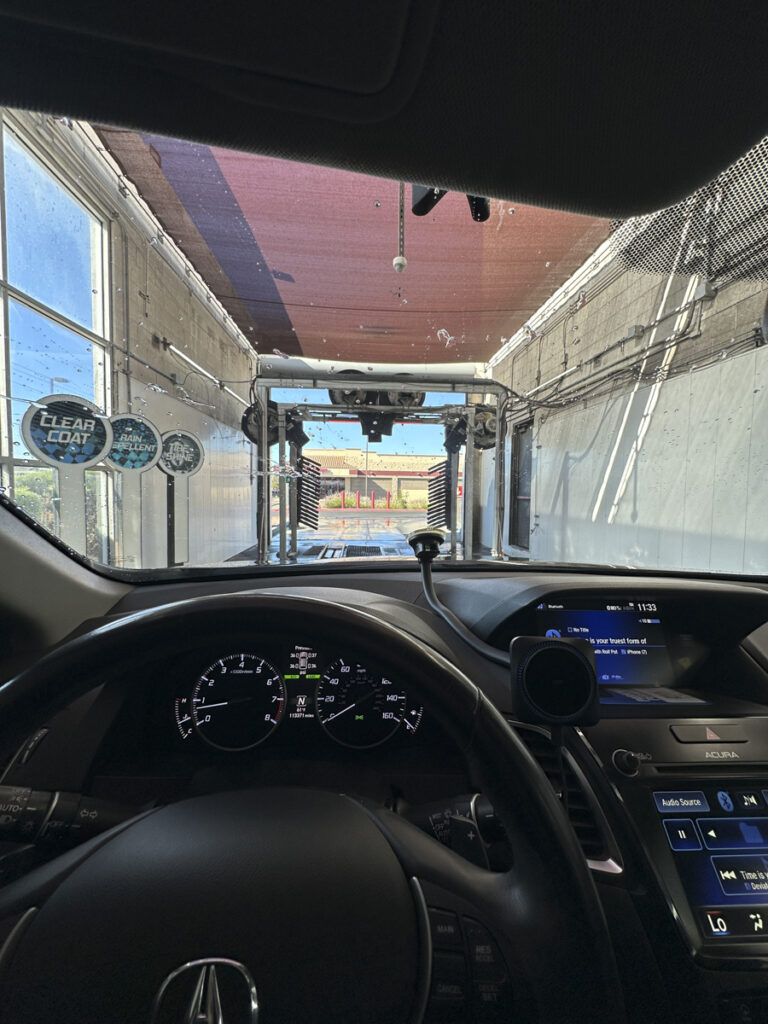
I didn’t panic [much]. I was thinking back to it, how my brain went straight into a preparing to panic.
I was thinking, okay, well how long do I have to wait before I do something?
- How long is this going to take?
- Do they even know I’m in here?
- What does that one buzz mean?
- Should I be looking for a phone number?
So I kept checking my rear view mirror for signs of just anything. I thought, oh, any second, it’ll start back up.
Or maybe someone would just come like from the behind and they’d be walking toward my car. It felt like forever, of course, because I had no idea how long I would be sitting there. Kind of like when I drive to a new place for the first time, that trip always feels longer when I don’t know how far I have to go.
Yeah, I have maps with estimated times, but even with that, and this waiting period that I had is very similar to what I feel when I hit publish on something or I turn something on or I start a new tactic.
So when I make changes to a website, I usually wait a couple weeks before deciding if they’ve worked or not.
That timeframe is a general guideline that most people in the search world tend to use.
Google, however, runs on its own clock, as you might imagine it updates in waves. If I make a change right after one of those updates rolls out, it can be a while before my change even gets considered.
Google Ads has its own version of this too. It has to learn who you are, what you offer, and who’s a good match. It doesn’t just know on that day one, why not.
I still can’t logically understand given how smart technology is, but it’s something I just have to accept.
And AI search engines like Perplexity and ChatGPT, some of them aren’t even looking at live content. They’re working off of data and pages that could be weeks or months old.
So that new service page or those updates that you’ve just created, they might not yet exist in their world, and we don’t hear a lot about this side of search visibility or of marketing.
You do the work, you hit go, and then nothing happens immediately.
And then our brains are off to the races.
- Did I do it right?
- Was this the wrong move?
- Should I change something?

This is where a mental tug of war kicks in. You want to be patient. You also don’t wanna be stubborn, and you definitely don’t wanna waste time or money.
For me, two weeks is usually the first checkpoint. Sometimes you see movement right away. Sometimes you see the start of a trend. Sometimes it’s just quiet.
And sometimes you get what feels like a false start. It’s like a rush of leads that look exciting, but they’re of really poor quality or things go completely silent.
I see that a lot with ads, and yes, no platform is going to admit that that’s even a thing.
There’s also an intuition side that says, okay, it’s been long enough. This just doesn’t feel right anymore.
What’s difficult is not knowing which period you are in.
Is it the normal waiting period or the not working period, and that’s why waiting feels so uncomfortable.
It feels like sitting in that car wash with no way of knowing if it’s gonna start up again.
You’re stuck between trusting the process and wanting proof that you made a smart decision.
Your job isn’t to force results by thinking of the next steps right away. It’s to stay in trust of the process.
Otherwise, the brain stays in sort of a panic mode, a less than positive mode, and it causes more stress.
So decide ahead of time what your checkpoint will be.
If you’re working on a blog post to improve it from page two to page one. For example, this could be that ranking.
If it’s increased search visibility for a specific phrase, maybe that’s more impressions.
The other part of the checkpoint is the period of time you’ll allow the changes to take effect.
So pick a date, put it on your calendar, either two weeks, three weeks, whatever makes sense for what you changed.
A lot of the time, your project or your task priorities will influence this.
When you get there, look for indicators or movements. Are impressions shifting? Are clicks changing? Is anything starting to move even a little? Just observe.
From there, the next step becomes either you stay the course because the results are moving the way that you want, or you make a change because what the data is saying no longer lines up with what you want.

Now, how long did I end up sitting in that stopped car wash? Looking back, it was probably less than two minutes. I’m so glad I made it out of there. No scary mass chainsaw wielding monster came crashing through my windows.
The Takeaway
Waiting is hard. It is difficult. What makes it bearable is to define the checkpoint.
Your brain finds relief in the knowing versus the not knowing.